“tree common” search results (4000)
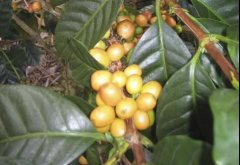
Boutique Coffee Common sense Coffee Variety introduction Pakamara (Pacamara)
Pacamara coffee is a hybrid of Pacas Pacas (a sudden variant of the bourbon species) and giant bean Maragogype (a sudden variant of the Tibica species found in Brazil) found in El Salvador in the 1950s. The coffee tree is very tall, the branch spacing of the trunk is wider than that of Pacas Pacas, and the edge of dark green leaves is wavy. It is suitable for cultivation at the elevation of 900m to 1500m.
2015-09-15 Boutique coffee common sense variety introduction Paka Mara Pacamara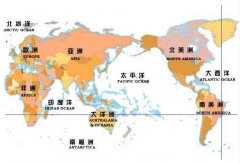
Boutique coffee beans common sense Brazilian bourbon Santos coffee
Brazilian bourbon Santos coffee flavor and taste characteristics: a variety of flavors, low acidity, taste lubrication. Brazil is a rich and beautiful land, with the Atlantic Ocean in the east, more than 7400 meters of coastline and the famous Andes in the west. Brazil is also the world's largest coffee producer, known as the coffee country. Brazil is vividly compared to the giant and monarch of the coffee world. BA
2015-06-01 Boutique coffee beans common sense Brazil Bourbon Doz coffee
High-quality coffee beans common sense male beans and mother beans allusions
Many friends who came back from Southeast Asia talked about coffee and talked about the vocabulary of public beans and mother beans. After looking up the information, Kirin found that it was what we call flat beans and round beans (Pea Berry and Flat Bean). Secondly, you can also learn about the part of beans divided by the green circle-- Pea Berry and Flat Bean. Through the usual understanding, we must know.
2014-12-29 Boutique coffee beans common sense public beans mother beans allusions many Southeast Asia back friends
What are the types of coffee beans?
Coffee belongs to the genus Coffea. The genus is a member of the Rubiaceae family, which has more than 500 species and more than 6000 varieties, most of which are tropical trees and shrubs. From the perspective of drinkers, coffee trees can be roughly divided into 5 species, of which Arabica and Robusta are more common. Arabica species account for more than 70% of the world's total production.
2015-01-19 boutique coffee beans common sense coffee classes have which biology genus class named
Cultivation techniques of Coffee History of Botany Coffee roasting
The cultivation technology editor requires that the origin of coffee tree [4] is in Ethiopia in Africa. In botany, coffee trees belong to the evergreen trees of the subgenus Rubiaceae, and coffee beans, commonly known as coffee beans, are actually the seeds of the fruit of coffee trees. They are called coffee beans only because they are shaped like beans. Climate is the decisive factor for coffee cultivation. Coffee trees are only suitable for growing in the tropics or
2016-06-07 Coffee cultivation techniques plants History Baking Editing requirements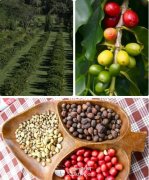
Coffee Common sense Coffee Special Classification system
Special classification system of coffee: 1. Subgenus Coffea: 2. Malagasy coffee subgenus: 3. Subgenus Pala Coffee: 4. Age coffee subgenus: a, red coffee group: B, thick-skinned coffee group: C, Mozambican coffee group: d, black fruit coffee group E, dwarf coffee group: red fruit coffee group: a) Arabica species: Tibica varieties: (Tp)
2014-09-15 Coffee knowledge coffee common sense coffee classification
Coffee planting conditions
The origin of the coffee tree is Ethiopia in Africa. In botany, coffee trees belong to the evergreen trees of the subgenus Rubiaceae, and coffee beans, commonly known as coffee beans, are the seeds of the fruit of coffee trees, just because they are shaped like beans, so they are called coffee beans. Climate is the decisive factor for coffee cultivation. Coffee trees are only suitable for growing in the tropics or subtropics, so latitude 25 is south and north.
2016-06-04 Coffee cultivation conditions coffee origin Africa Ethiopia botany genus
Ethiopia Yega Shefi Fine Coffee Bean Common Sense
Yegashefi is a small town, 700- 21,000 meters above sea level, synonymous with Ethiopian fine coffee. It is a wetland since ancient times, and the old saying Yirga means to settle down, and Cheffe means wetland. The way coffee is produced and the flavor is so prominent here that Ethiopian coffee farmers compete to be proud of their coffee with Yegashfi flavor, which has become Africa's best.
2015-04-14 Ethiopia Yega sherry boutique coffee beans common sense small town
Common cultivated varieties of coffee, types of coffee beans
Coffee trees are small shrubs growing in tropical highlands. Their fruits are red or yellow, and the seeds inside are what we call coffee beans. At present, coffee beans are grown in about 66 countries in the world, among which they can be classified as Arabica, Robusta and Liberica. Arabica is the largest major variety of coffee beans, accounting for about 80% of its aroma and quality. And
2016-06-05 Coffee common cultivation varieties coffee beans species coffee growth tropics highlands
Basic knowledge of fine coffee about the type of coffee
Coffee belongs to the genus Coffea. The genus is a member of the Rubiaceae family, which has more than 500 species and more than 6000 varieties, most of which are tropical trees and shrubs. From the perspective of drinkers, coffee trees can be roughly divided into 5 species, of which Arabica and Robusta are more common. Arabica species account for more than 70% of the world's total production.
2014-12-12 boutique coffee basics common sense talk species biology genus name
Coffee common sense how to judge whether raw coffee beans are fresh or not
From the fruit state of coffee beans when they are picked from the tree to the state of raw beans that can be baked, the moisture content of coffee beans will be controlled between 9% and 13%, and it is not easy to bake if the water content is too high or too low. Generally, we get newly collected raw beans with water washing treatment, the moisture content is usually about 11.5% to 12.5%, half-washed Mantenin may reach 13%, and half-washed Brazil is 11% ~ 12% per day.
2015-03-20 Coffee common sense how to judge raw beans whether fresh coffee beans trees pick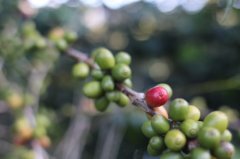
Coffee common sense how to judge whether raw coffee beans are fresh or not
From the fruit state of coffee beans when they are picked from the tree to the state of raw beans that can be baked, the moisture content of coffee beans will be controlled between 9% and 13%, and it is not easy to bake if the water content is too high or too low. Generally, we get newly collected raw beans with water washing treatment, the moisture content is usually about 11.5% to 12.5%, half-washed Mantenin may reach 13%, and half-washed Brazil is 11% ~ 12% per day.
2015-06-06 Coffee common sense how to judge raw beans whether fresh coffee beans trees pick
What are the cultivation techniques of coffee trees? what is the reason for the astringency of coffee?
It is required that the origin of coffee tree [4] is in Ethiopia in Africa. In botany, coffee trees belong to the evergreen trees of the subgenus Rubiaceae, and coffee beans, commonly known as coffee beans, are actually the seeds of the fruit of coffee trees. They are called coffee beans only because they are shaped like beans. Climate is the decisive factor for coffee cultivation. Coffee trees are only suitable for growing in the tropics or subtropics, so the south
2016-06-08 Coffee what cultivation techniques what is why requirements coffee origin Africa
Boutique coffee common sense about Jamaican coffee beans
Jamaica is an island country in the Caribbean with a small area. Coffee trees are planted on the slopes of the Hengduan Jamaica Island. The products are divided into three categories by region of production: A:BM (Blue Mountains) / B:HM (Alpine) / C:PM (Braim, Oz Shute). BM, HM, PM pay more attention to the quality and price order in front of the brand, PMHMBM. Among them, the taste, aroma, sour taste and personality of Blue Mountain
2014-11-12 Coffee knowledge boutique coffee coffee common sense Jamaica
What are the conditions for growing coffee trees? is there tannin in the coffee?
The planting conditions of coffee trees the origin of coffee trees is in Ethiopia, Africa. In botany, coffee trees belong to the evergreen trees of the subgenus Rubiaceae, and coffee beans, commonly known as coffee beans, are the seeds of the fruit of coffee trees, just because they are shaped like beans, so they are called coffee beans. Climate is the decisive factor for coffee cultivation, and coffee trees are only suitable for growing in the tropics or subtropics.
2016-06-12 Coffee planting need what condition Ning Acid Origin
Coffee basics common sense Where does the real coffee mellow taste come from
To coffee aficionados like me, there is no smell that can compare to the smell of coffee fields in bloom. Coffee tree's first flowering period is about three years, white flowers for the five-petal tubular flowers, floating with a faint jasmine fragrance, inflorescences dense and arranged in clusters. After two or three days of flowering, it will wither and begin to bear fruit after a few months. In Yunnan, this period is just right
2014-12-11 coffee basics common sense real aroma bottom inside like this heart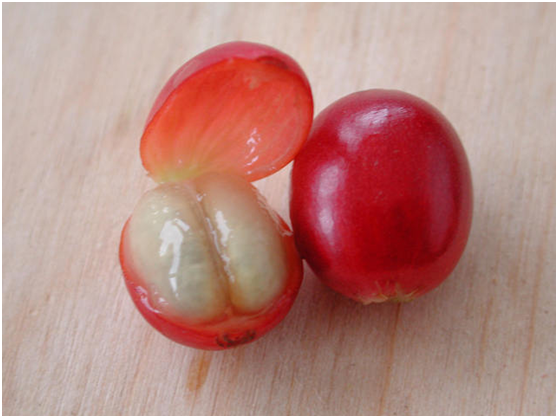
Coffee refining-a common method for the treatment of fine coffee beans
[introduction] there are a pair of oval seeds in the center of the fruit of the coffee tree, which are covered with exocarp, endocarp and pulp. Ripe fruit will rot in a short period of time without treatment, so the purpose of refining is to enable coffee beans to be preserved for a long time, easy to store and circulate. Figure (1) Coffee tree has a pair of oval seeds in the center of the fruit, which are covered by exocarp, endocarp and pulp.
2015-11-18 Coffee preparation boutique coffee beans commonly used treatment methods
Introduction to coffee tree knowledge
The coffee tree is native to Ethiopia in Africa. Coffee tree in botany, belongs to the Rubiaceae coffee subgenus evergreen tree, and generally known as coffee beans, in fact, coffee tree fruit seeds, only because of the shape like beans, so called coffee beans. Climate is the decisive factor for coffee cultivation. Coffee trees are only suitable for growing in the tropics or subtropics, so latitude 25 degrees north and south.
2015-02-11 Boutique Coffee Common sense Basics Introduction Origin Africa Ethiopia
Various coffee cultivation methods the flavor of Ethiopian coffee
The origin of the coffee tree is Ethiopia in Africa. In botany, coffee trees belong to the evergreen trees of the subgenus Rubiaceae, and coffee beans, commonly known as coffee beans, are the seeds of the fruit of coffee trees, just because they are shaped like beans, so they are called coffee beans. Climate is the decisive factor for coffee cultivation. Coffee trees are only suitable for growing in the tropics or subtropics, so latitude 25 is south and north.
2016-05-24 Various coffee cultivation ways Ethiopia flavor origin Africa
Coffee knowledge the generating environment of coffee trees
In botany, coffee trees belong to the evergreen trees of the subgenus Rubiaceae, and coffee beans, commonly known as coffee beans, are actually the seeds of the fruit of coffee trees, just because they are shaped like beans. Climate is the decisive factor for coffee cultivation. Coffee trees are only suitable for growing in the tropics or subtropics, so the zone between latitude 25 degrees south and north is generally called coffee belt or coffee area.
2014-09-16 Coffee knowledge coffee tree coffee tree growth